

Samsung Galaxy Tab S9 WiFi
Smooth everyday performance backed by 8 GB RAM and Snapdragon 8 Gen 2 for Galaxy. No 3.5 mm headphone jack, which pushes you towards wireless audio.
Best overall: Samsung Galaxy Tab S9 WiFi. We compared 5 tablets using current price, editorial assessment, and buyer feedback.
The ranking weighs current price, editorial assessment, useful technical data, and buyer feedback.
Smooth everyday performance backed by 8 GB RAM and Snapdragon 8 Gen 2 for Galaxy. No 3.5 mm headphone jack, which pushes you towards wireless audio.

microSD expansion up to 2 TB adds real long-term flexibility. Not the clearest choice if you need a polished pen experience or serious gaming headroom.
Read review
Easy setup and dependable day-to-day performance fit study and family use well. Cameras are functional for calls but not a reason to choose this tablet
Read review| Samsung Galaxy Tab S9 WiFi | 11 Inches | 2560x1600 | Snapdragon 8 Gen 2 | 8.8 | 8.4 | £583 |
| Samsung Tab A9+ | 11.0 inches | 1920 x 1200 pixels | N/D | 9.0 | 7.6 | £298 |
| Lenovo Idea Tab 11" 2.5K (2025) | 11 Inches | 2560x1600 Pixels | MediaTek Dimensity 6300 | 8.7 | 8.4 | £187.89 |
| TABWEE T90 | 11 inches | 1920x1200 pixels | T615 octa-core | 8.6 | 7.2 | £169.99 |
| Lenovo Tab Plus | 11.5 Inches | 2000x1200 Pixels | N/D | 8.8 | 7.2 | £239 |
Samsung Galaxy Tab S9 WiFi wins on Ranking score and Batería y carga; the final gap is 3.6 points over 100.
Samsung Tab A9+ pushes back on Price value, but it does not offset the overall score gap.
Samsung Galaxy Tab S9 WiFi stays first because it combines the ranking score, current price, and comparable category signals better than Samsung Tab A9+.
Samsung Galaxy Tab S9 WiFi wins on Ranking score and Batería y carga; the final gap is 5.6 points over 100.
Lenovo Idea Tab 11" 2.5K (2025) pushes back on Price value, but it does not offset the overall score gap.
Samsung Galaxy Tab S9 WiFi stays first because it combines the ranking score, current price, and comparable category signals better than Lenovo Idea Tab 11" 2.5K (2025).
Samsung Galaxy Tab S9 WiFi wins on Ranking score and Fluidez diaria; the final gap is 7.0 points over 100.
Lenovo Tab Plus pushes back on Tamaño de pantalla and Price value, but it does not offset the overall score gap.
Samsung Galaxy Tab S9 WiFi stays first because it combines the ranking score, current price, and comparable category signals better than Lenovo Tab Plus.
Samsung Galaxy Tab S9 WiFi wins on Ranking score and Fluidez diaria; the final gap is 5.8 points over 100.
TABWEE T90 pushes back on Batería y carga and Price value, but it does not offset the overall score gap.
Samsung Galaxy Tab S9 WiFi stays first because it combines the ranking score, current price, and comparable category signals better than TABWEE T90.
The Galaxy Tab S9 WiFi is aimed at buyers who want an 11-inch Android tablet that feels quick for streaming, browsing, note-taking and light desk work without drifting into laptop territory. Its strongest pull is the combination of a Dynamic AMOLED 2X panel, the included S Pen and Samsung’s familiar Android software, all wrapped in a slim 128 GB slate with 8 GB RAM. The main trade-off is that the most useful extras are concentrated in the experience rather than the box contents, so the value case depends on how much you care about the screen, the pen and the tablet itself.
If you want a roomy Android tablet that feels genuinely useful for streaming, browsing and light study without drifting into premium-tablet pricing, the Samsung Tab A9+ is an easy model to shortlist. The 11-inch screen, 8GB of RAM, 128GB of storage and 5G support give it the kind of everyday flexibility that matters most, especially if you want one device that can stay useful at home and still work properly on the move.
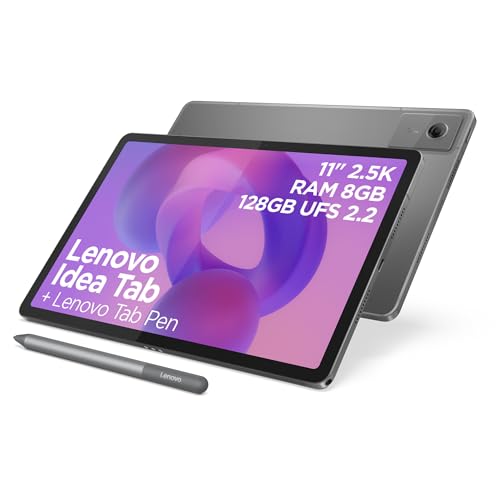
If you want a study-friendly Android tablet with a sharp 11-inch 2.5K screen, pen input included and enough storage for everyday work, the Lenovo Idea Tab lands in a very sensible middle ground. Its appeal is obvious for reading, note-taking, streaming and light family use, but the real question is whether the MediaTek Dimensity 6300, 8 GB of RAM and 128 GB of storage give you enough headroom for more than the basics without feeling cramped later.
The TABWEE T90 is aimed at the buyer who wants one affordable Android tablet to cover streaming, web use, reading, email and occasional keyboard work without paying Samsung or iPad money. Its strongest appeal is obvious: an 11-inch 1920x1200 display, expandable storage, Android 15, and a bundle that includes keyboard, mouse and stylus. The real trade-off is that this is a value-first package, not a polished premium tablet, so the extras add convenience but do not turn it into a true laptop replacement.

If you want a media-first Android tablet that makes sound and screen quality matter more than featherweight portability, the Lenovo Tab Plus is a credible buy. Its 11.5-inch 2K display, 8GB of RAM, 128GB of storage and JBL speaker array give it a clear home as a sofa tablet for streaming, browsing and casual app use, but the 650 g build means this is not the one to pick if you want the lightest slate to carry everywhere.
The ranking compares published products with a stable framework: editorial quality, buyer signals, current price when the preset requires it, and comparable category metrics. It does not claim original lab testing; it documents how available signals are weighted so the order remains auditable.
Setup: Collect published reviews, current product data, and comparable technical fields.
Measured variable: Coverage for current price, rating, local review URL, and primary category metrics.
Evaluation rule: Only updated products with enough comparable data can enter.
Setup: Cross editorial score, buyer signals, and price when the preset requires it.
Measured variable: Normalized ranking score on a traceable 0-100 scale.
Evaluation rule: The winner must sustain a stronger balance than the finalists, not just one isolated metric.
This ranking is refreshed from published reviews, current category catalog signals, editorial scoring, and current price. Scores are calculated against the eligible category universe; the visible top only shows the models that pass the final cut.
Descending order: the winner has the strongest balance of Q_final and normalized price against the eligible category universe.
Buyer signal uses the scoring v2 Bayesian score; it is not a simple stars times two conversion.
Computed against eligible comparable category candidates, not only against the visible top. P05=173.57; P95=526.0.
If a critical axis falls below the threshold, final quality is penalized so one weak product cannot win only on price.
It does not mean choosing the cheapest product by default. The ranking crosses editorial score, buyer satisfaction, useful technical data, and updated price to identify the model with the most defensible balance.
The page prints the latest available refreshed price to make comparison clearer, but Amazon can change price and availability at any time. The live purchase link remains the final check before buying.
Yes. The preset ranking keeps the editorial frame, URL, and components stable while recalculating internal positions when comparable data changes or new models enter the catalogue.
The ranking is not meant to list the whole catalogue. A model first needs a published review, a current price, and comparable signals; then only the set that clears the operational cut is ordered. A product can stay outside the visible top when its price is stale, it has no public URL, its useful data is incomplete, or its balance of quality, user signal, and price remains weaker. This keeps the same freshness gate used across the rest of the site.